
Building with AI: From Data Agents to Full-Stack Apps (with AWS User Group Toronto)
WhenWed, November 4, 2026 · 6:00 p.m. EST – 7:30 p.m. EST
WhereAmazon Toronto Office (YYZ18), 7th floor, 18 York St
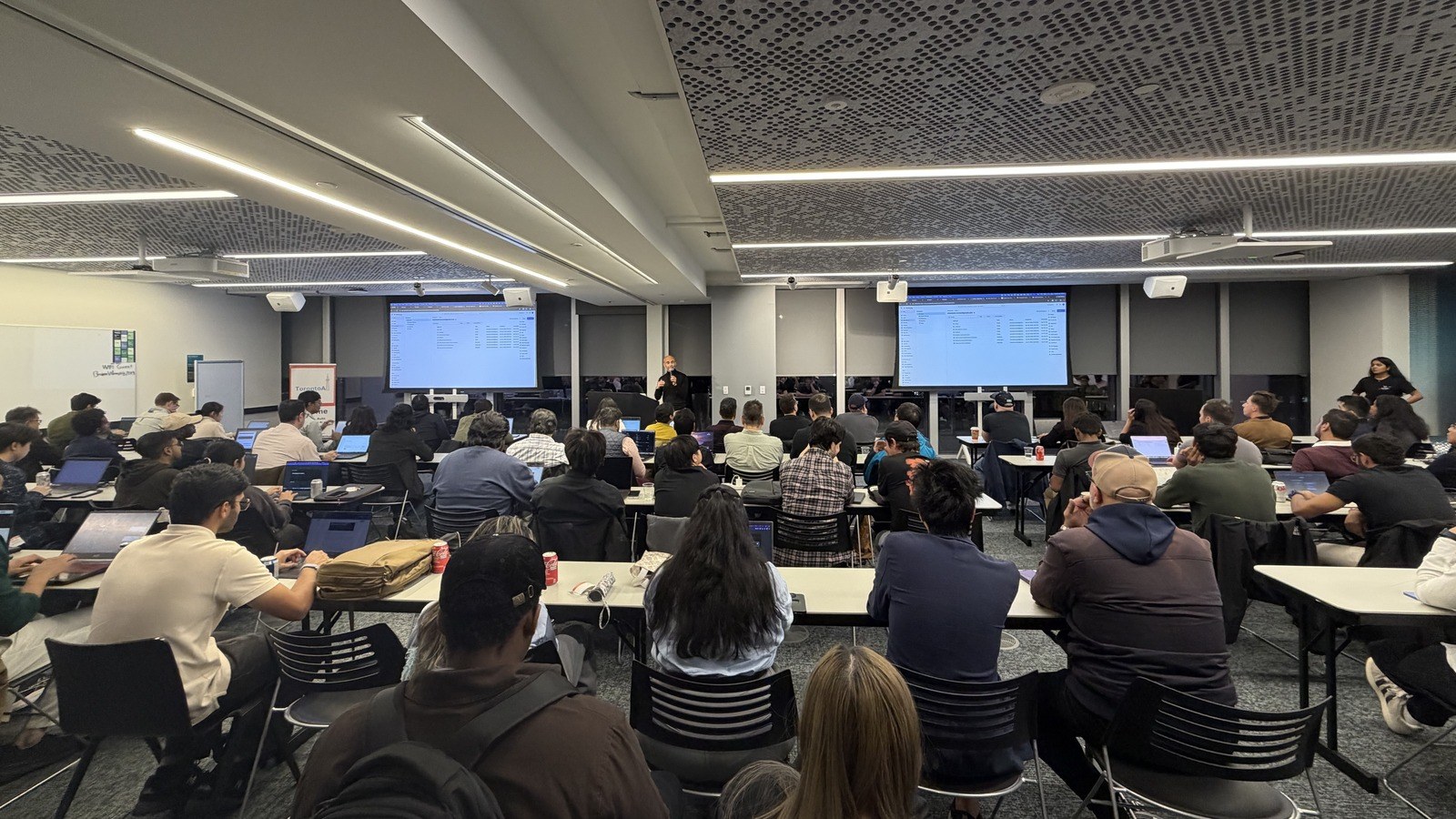
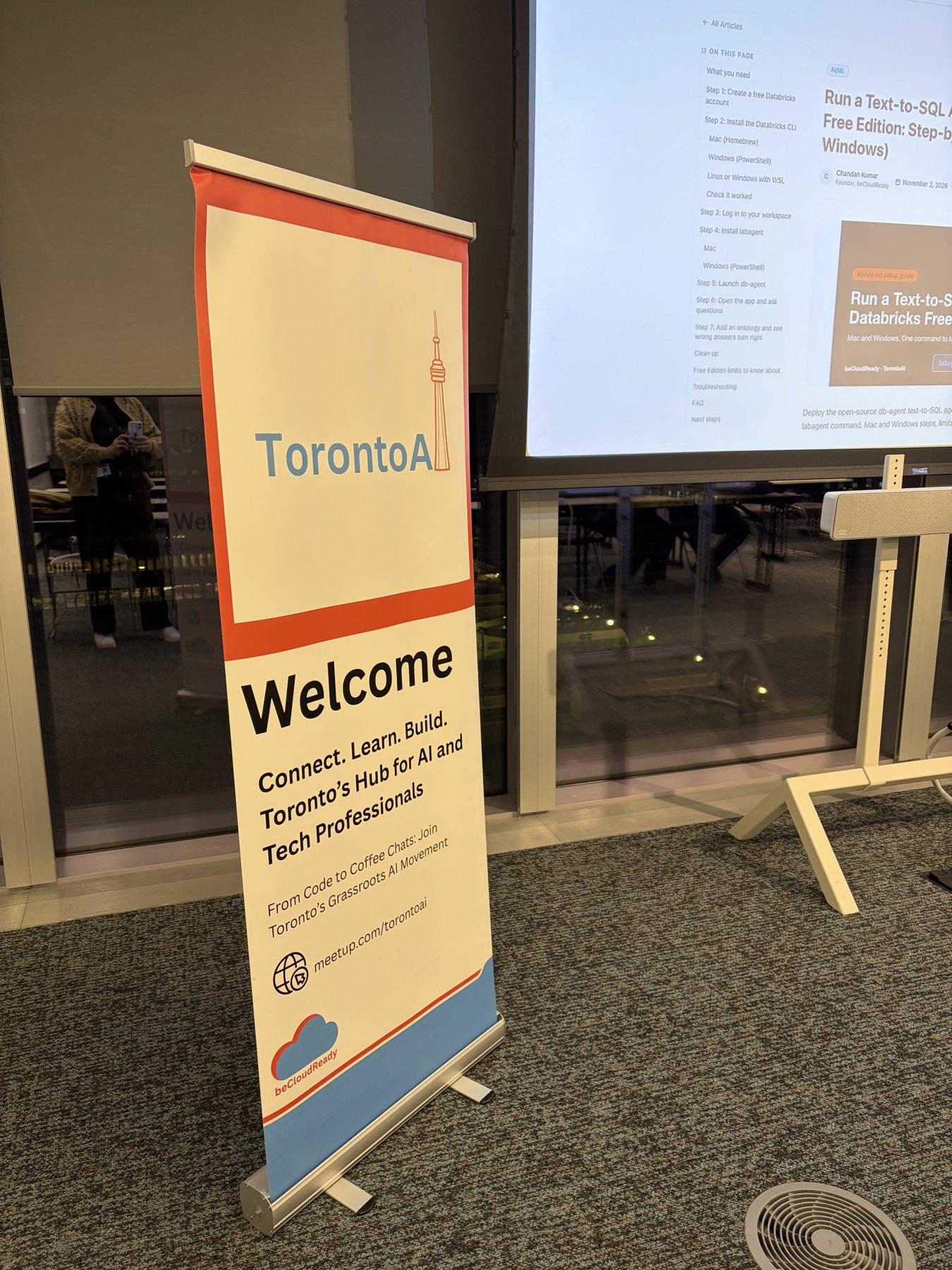
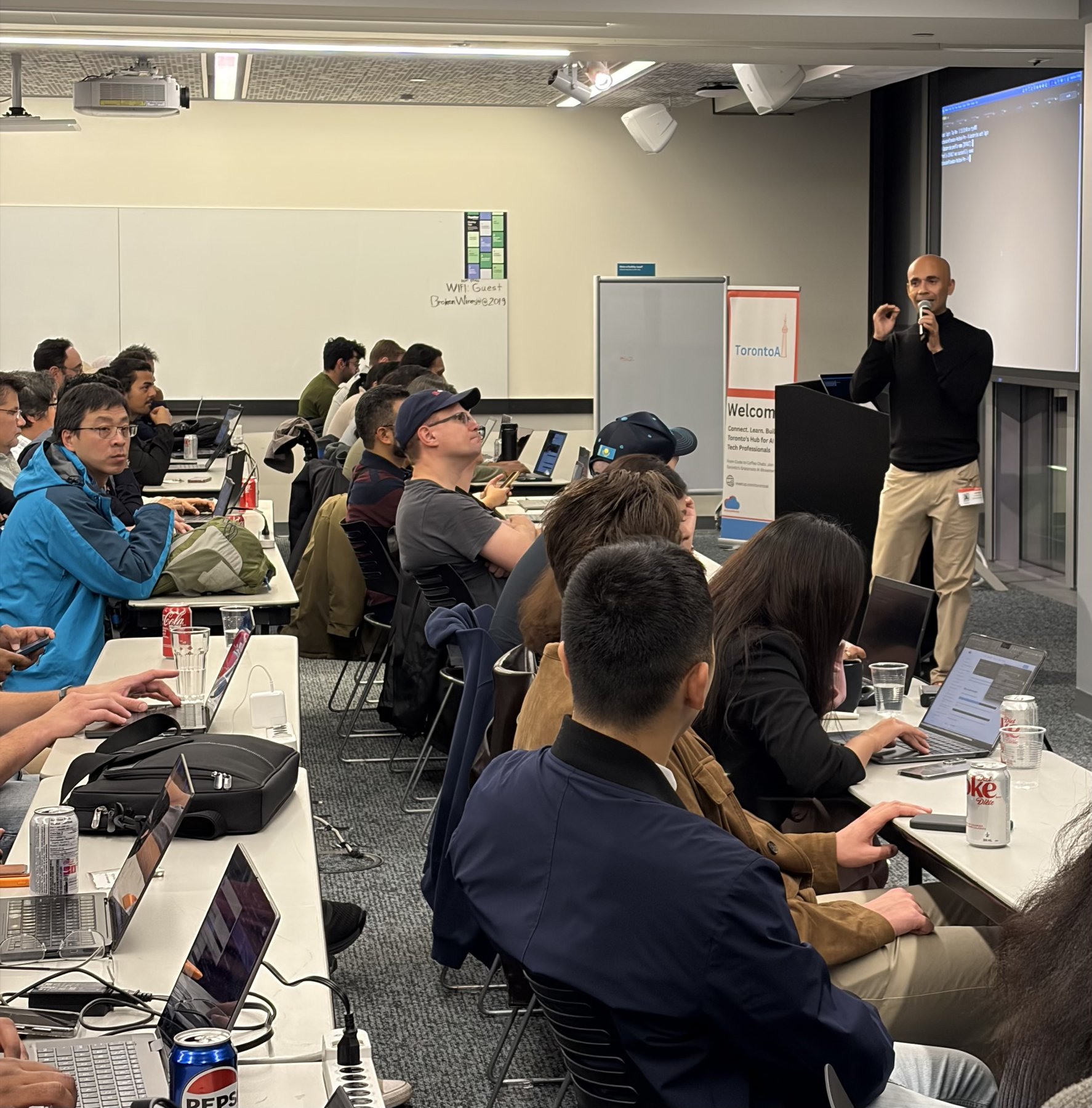
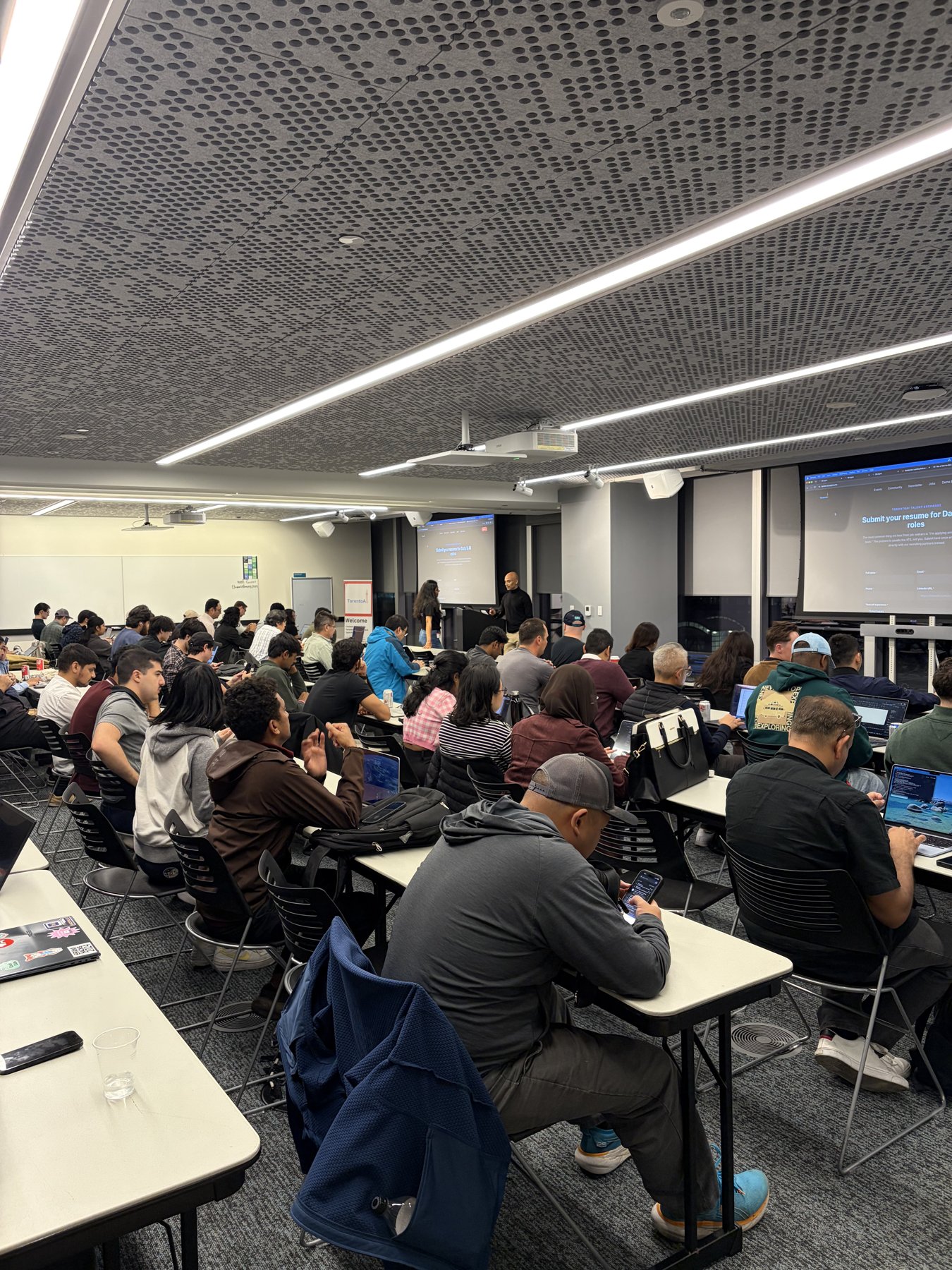
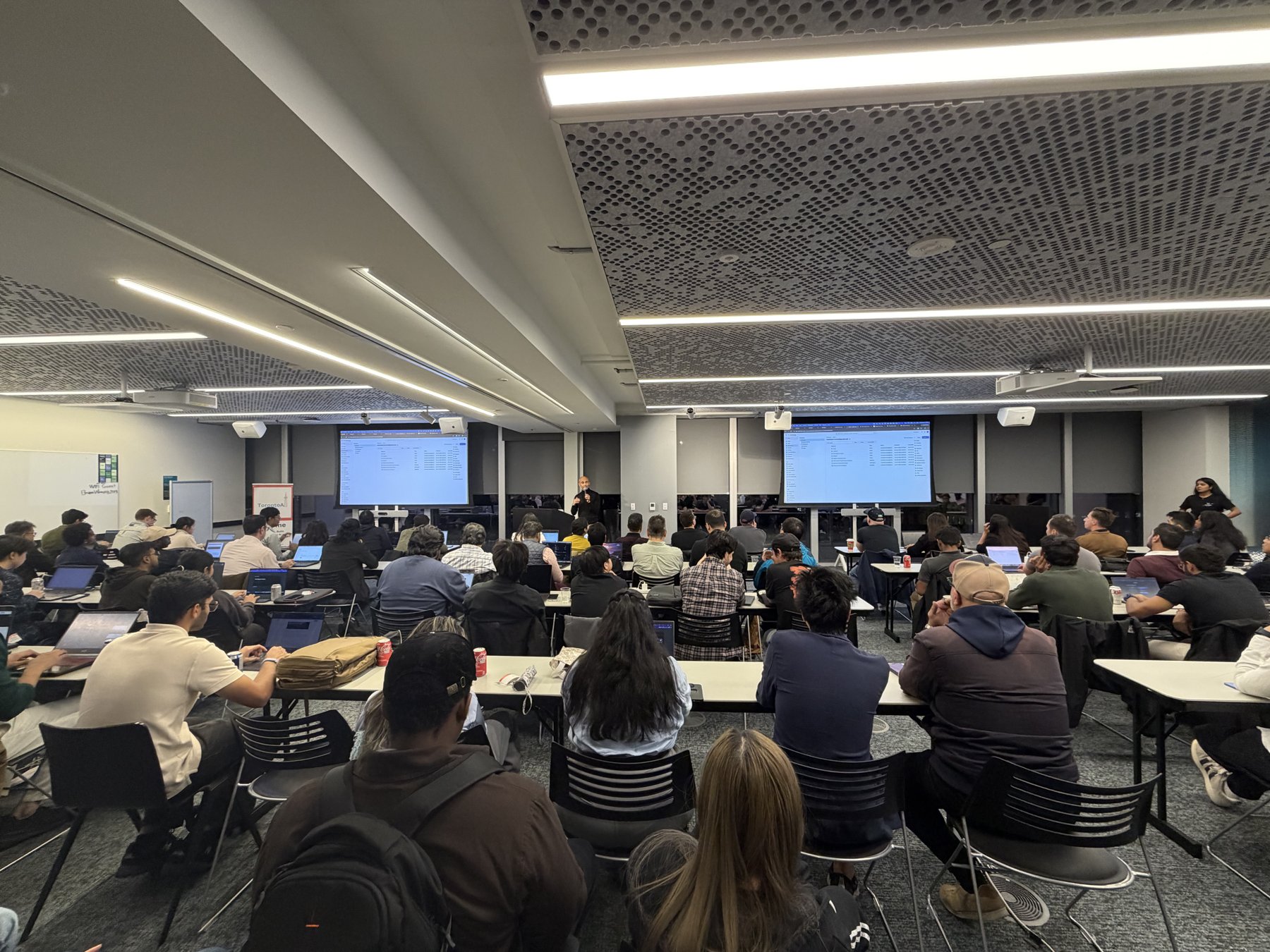
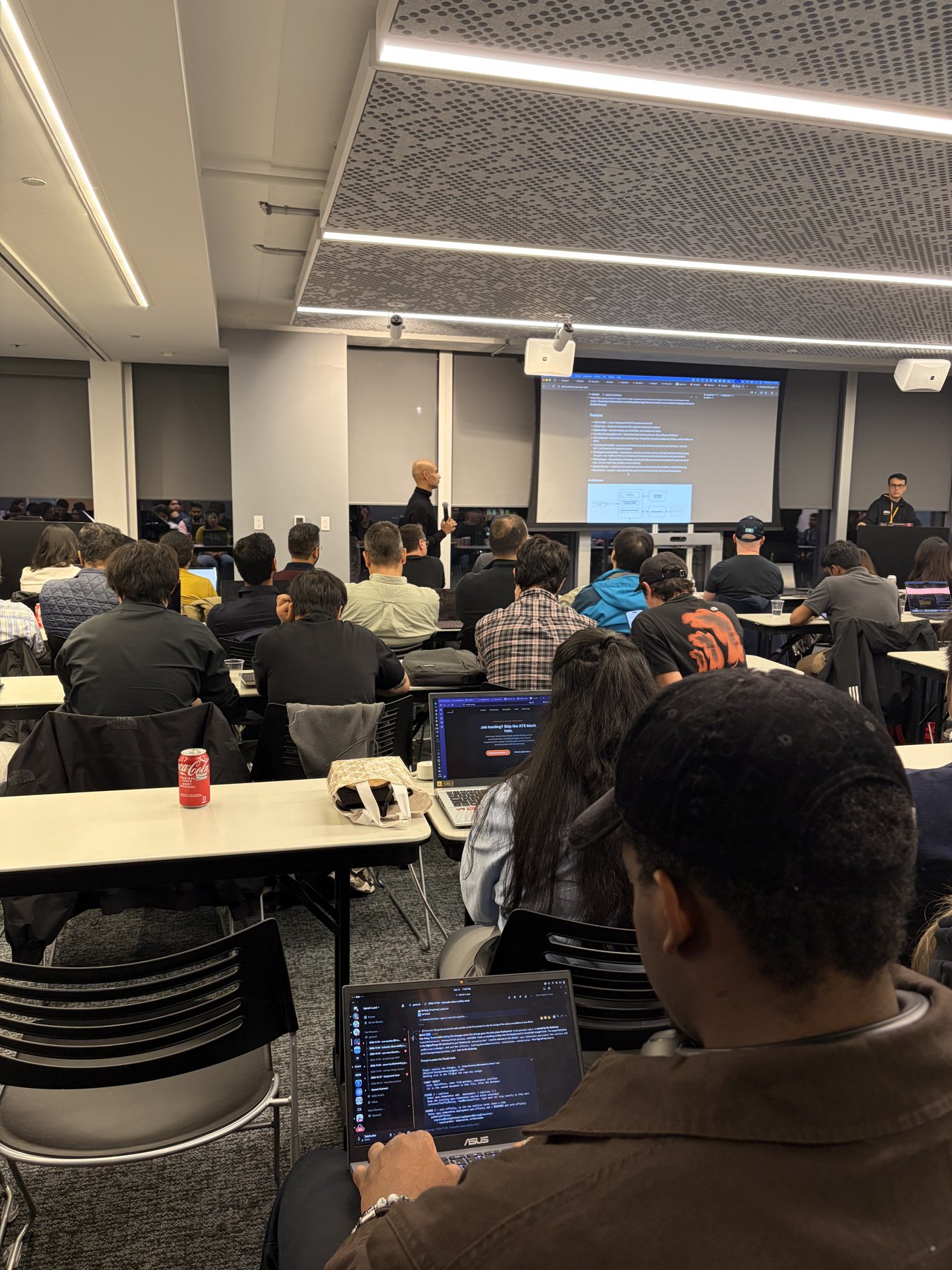
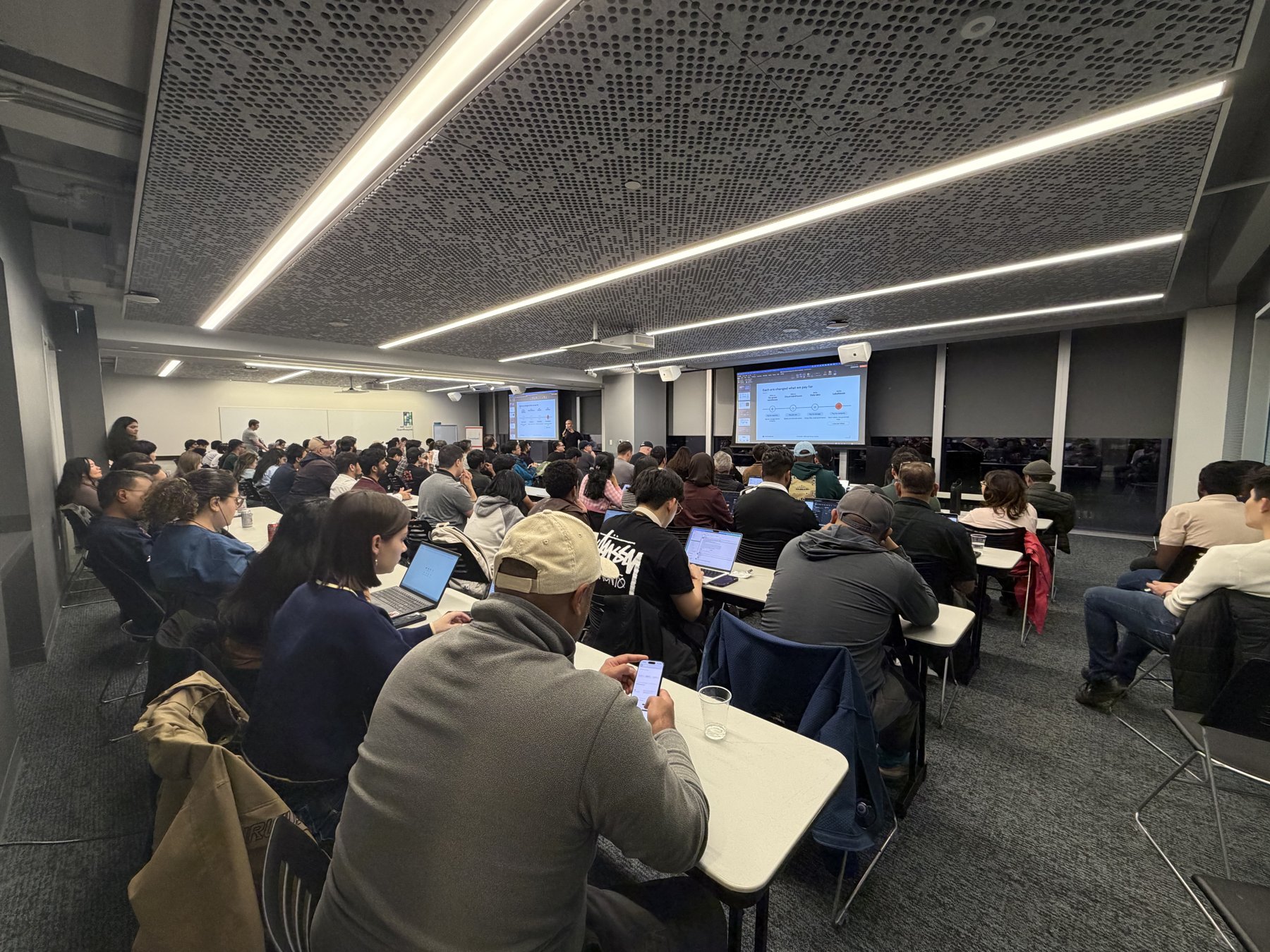
On November 4, 2026, TorontoAI and AWS User Group Toronto filled a room at the Amazon Toronto office (YYZ18) for a hands-on db-agent workshop. Chandan Kumar of TorontoAI and beCloudReady presented a talk built around one idea: every plain-English question your team asks now creates two bills.
The idea: two bills and one ontology
- Bill 1 is the LLM tokens. The model writes the SQL and you pay for the prompt and the answer.
- Bill 2 is the warehouse compute that runs that SQL.
Most teams only see one of them. The talk was careful on one point: for a single question the token bill is often the smaller one, and a warehouse scan can cost more. The claim was narrower and, we think, stronger: you need to see both bills separately and have a lever on each.
Six levers, each tied to one bill
- Bill 1, tokens: send less context, pick a cheaper model, cap the answer length.
- Bill 2, warehouse: allow SELECT only and cap rows, estimate the query with EXPLAIN COST, and ask for approval over a limit.
The closing question for the room: which of these can your current text-to-SQL tool change today?
Where the model runs decides Bill 1
db-agent talks to any OpenAI-compatible endpoint, so swapping the model is two lines in a .env file. The talk compared a small model on a laptop through Ollama, a model on Amazon Bedrock in your own AWS account, and Databricks Model Serving next to the data. The decision rule: take the cheapest model that passes your own benchmark.
The part nobody budgets for: the ontology
Most wrong answers are facts about your data that no schema contains. In the demo, questions ran with no error and still came back wrong: a supplier flag stored as Y and not Yes, card networks stored in lowercase, a gender column that spells the value out. The SQL was valid and the answer was zero or null.
An ontology is a small file of one-line notes: what values mean, how tables join, how revenue is defined. db-agent can scan the database for what is missing (names, types, comments and keys only, never rows), but a person writes the meaning.
On the demo dataset, the same 7B model (qwen2.5-coder in Ollama) answered 14 of 17 questions correctly with the schema alone and 17 of 17 with the ontology. That is a small test with one run per question, so read it as "on this test set", not "always". The ontology adds about 520 tokens per question: free on a local model, a multiplier on a paid one. It is a trade, not a saving.
Live demo
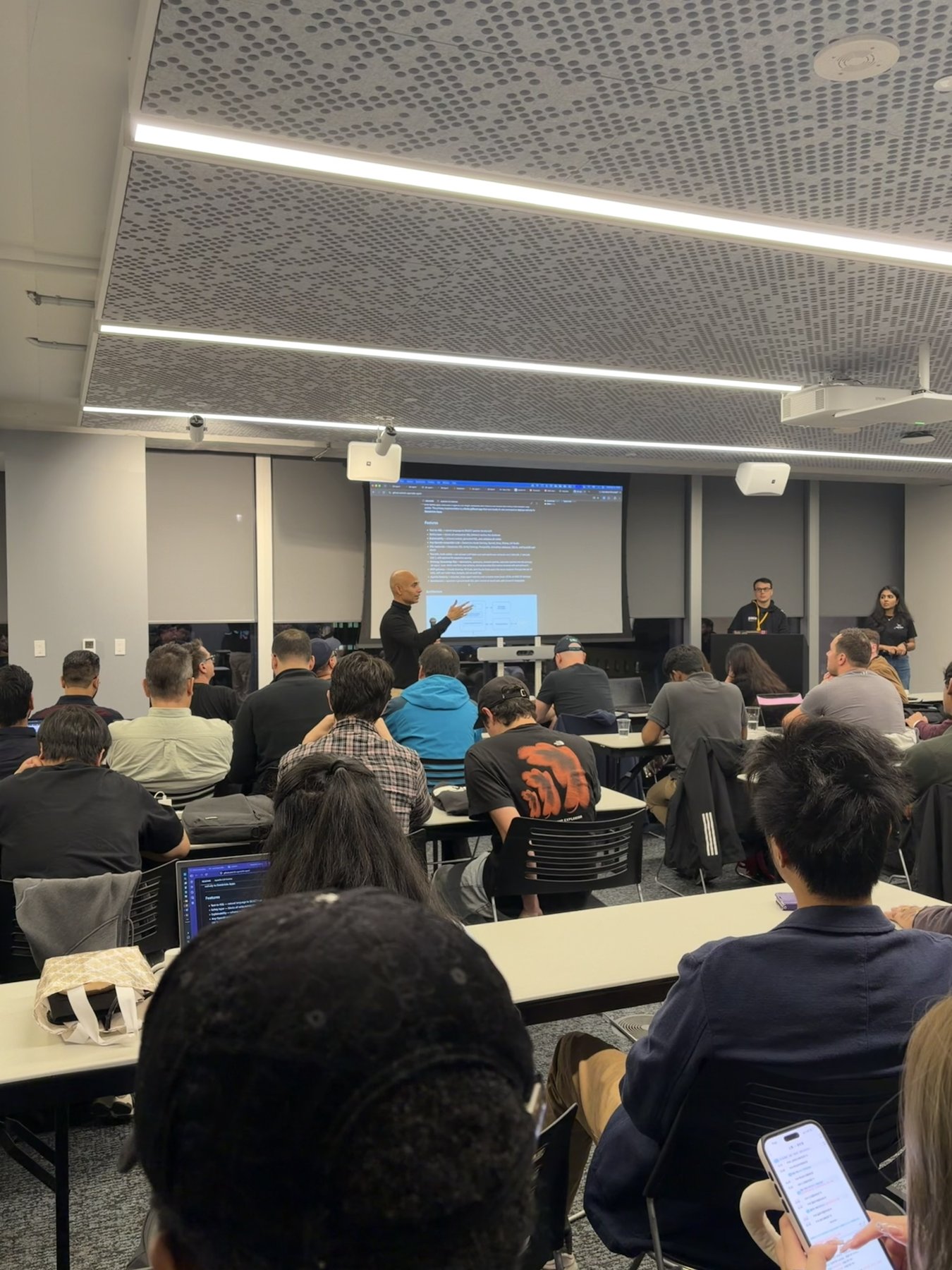
The demo ran in six stops on the open-source db-agent: ask a question and see the SQL, the rows and both bills; watch it fail silently without documentation; scan the database for what is missing; write three one-line notes and ask the same questions again; measure accuracy on 17 questions with and without the ontology; and open it as a Databricks App.
Shipping it
The same agent can be shipped three ways: a pull-request quality gate that scores generated SQL by result set, a manual workflow that deploys it as a Databricks App, and a one-command lab setup with labagent. Running it on a laptop saves the token bill but not the warehouse bill, and the talk said so plainly.
Hands-on
Attendees brought laptops and followed along on Databricks Free Edition.
Honest limits
- The accuracy numbers come from 17 questions per dataset and one run each.
- Small models score lower than large ones on hard SQL from the schema alone, which is why you measure and write the ontology.
- db-agent engines today are Databricks SQL, Postgres or Lakebase, SQLite and DuckDB. Snowflake is a target, not a tested engine.
Resources
- Run a Text-to-SQL AI Agent on Databricks Free Edition: step-by-step setup
- Ontology for text-to-SQL AI database agents on Databricks
- db-agent on GitHub (open source, Apache 2.0)
Thank you
Thank you to AWS User Group Toronto and the Amazon team for hosting, and to everyone who came with a laptop and stayed for the hands-on session. Want a session like this for your team? Book a call with beCloudReady.
About the speaker
Chandan Kumar is the founder of beCloudReady and an organizer of TorontoAI. He maintains the open-source db-agent project.
